Draft · Nov 12, 2026
The worst time to ask a bank for money is when you need it. That is exactly when most ABA owners ask.
I see the same pattern over and over. A payer slows down, or a batch of claims gets stuck, and payroll is nine days out. The owner calls the bank for the first time. The bank asks for three years of financials and says it will take six weeks. Maybe longer.
A line of credit is cheap insurance against that week. But you have to buy it early.
Why banks lend against ABA receivables
Your company has an odd shape. You pay staff every two weeks. Payers pay you 30 to 60 days after the session, sometimes later. The faster you grow, the more cash sits in that gap.
Banks understand that gap. What insurers and Medicaid owe you is an asset, and a fairly good one. The payers are large, they pay eventually, and the claims are documented. So a bank will lend against it.
The usual structure is a revolving line tied to your receivables. The bank advances a percentage of what it calls eligible A/R. As a rough illustration, think 75% to 85% of receivables under 90 days old.
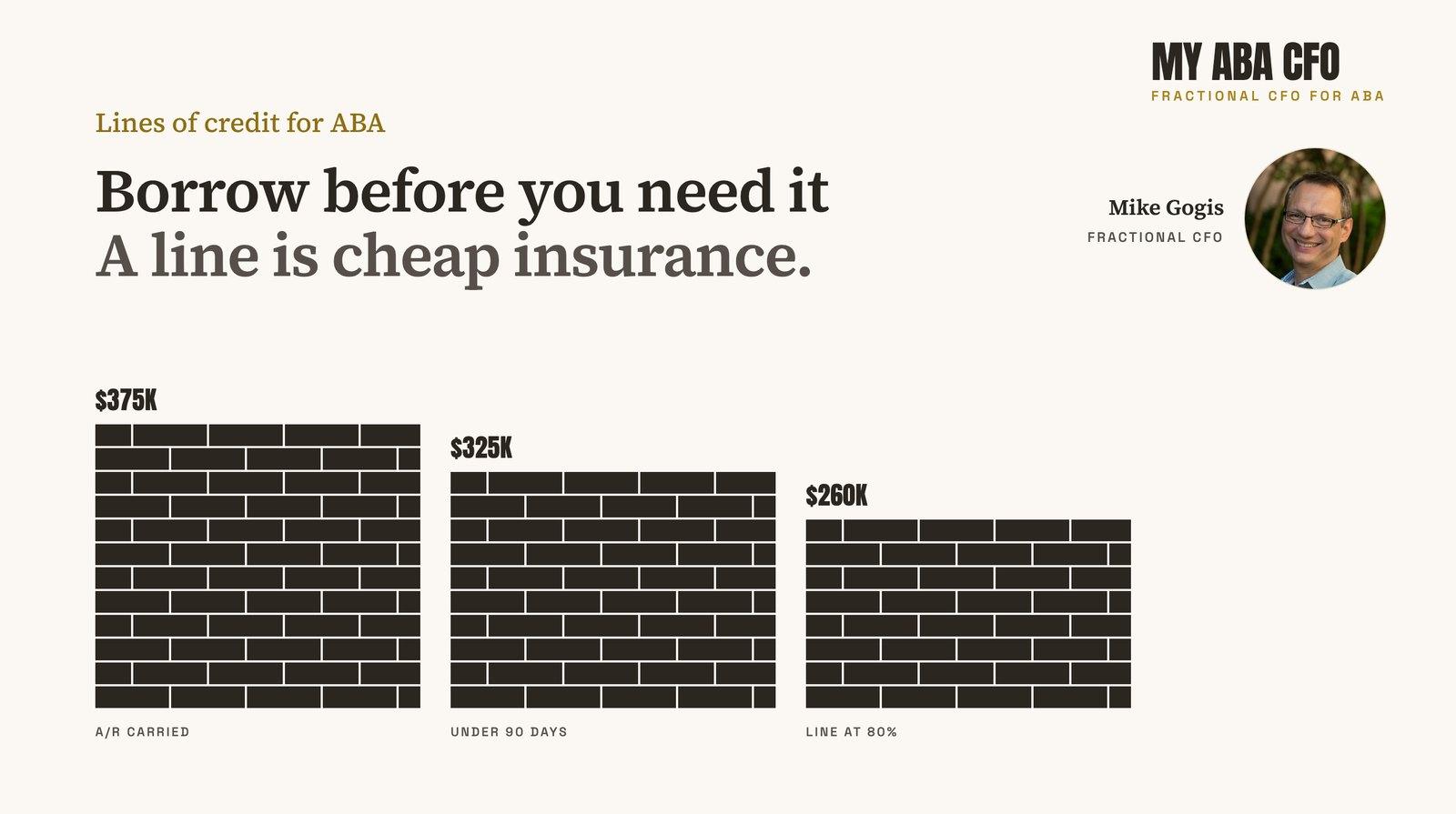
Say you bill $250,000 a month and carry about $375,000 in A/R. If $325,000 of that is under 90 days, an 80% advance rate supports a line of about $260,000. Roughly one month of billings. These are round numbers, not a quote.
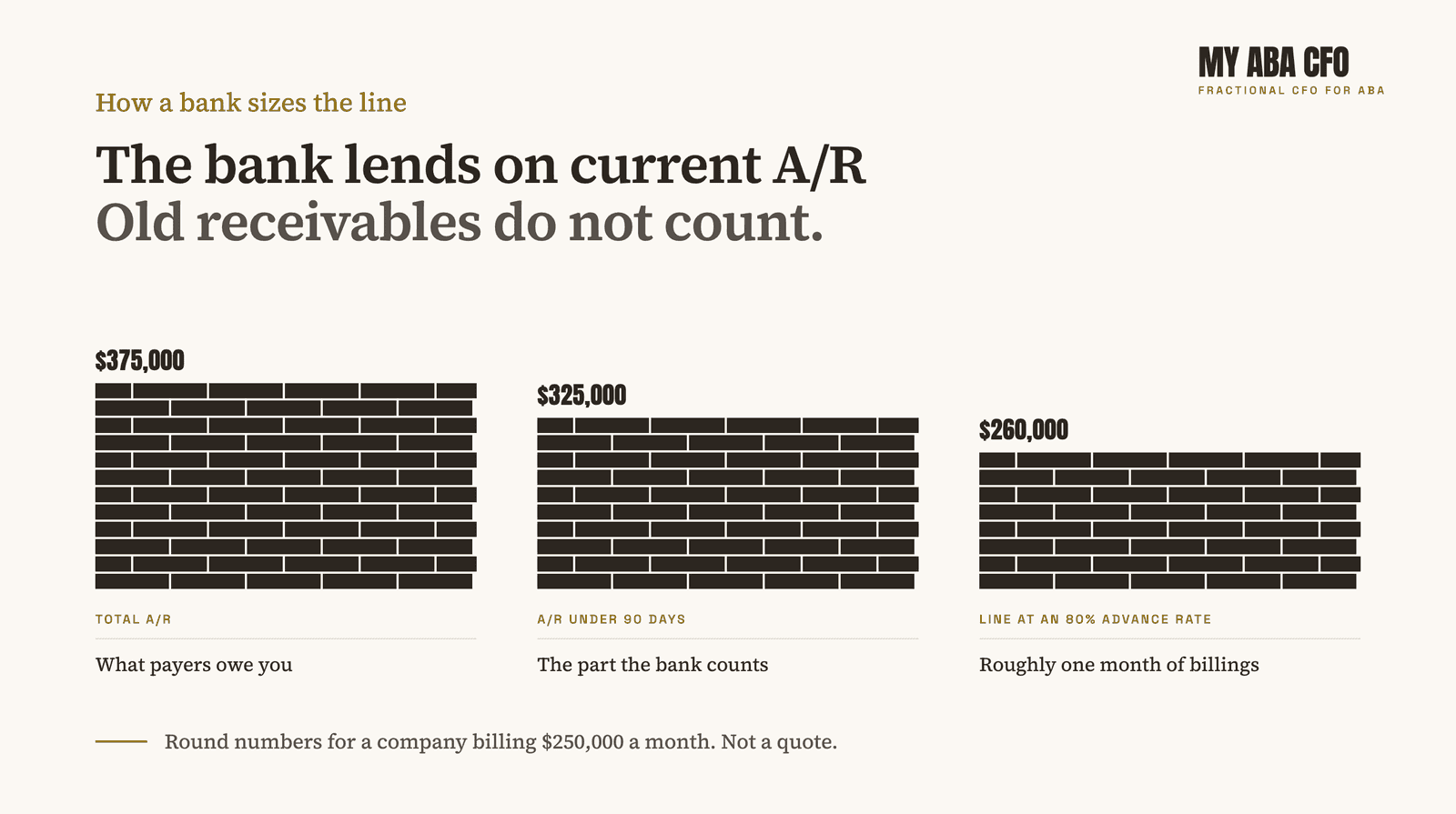
Notice what that means. Old A/R does not count. Clean, current receivables are what the bank lends on.
Do this now: Run your A/R aging by payer and see how much is over 90 days. That is the part a bank will ignore.
What the bank will ask for
None of this is exotic. It is just a lot at once if you have never pulled it together. Expect to hand over:
- Two to three years of business financial statements and tax returns
- Year-to-date financials, no more than a month or two old
- An A/R aging report, broken out by payer
- Your payer mix, and how much comes from your largest payer
- A list of existing debt, including equipment loans and leases
- A personal financial statement, and usually a personal guarantee
Then come the terms. Most lines renew every year. Many carry covenants, which are promises about your numbers, such as keeping profit at a set level relative to your debt payments. Some require a monthly report showing your receivables against what you have borrowed.
Read these before you sign. A covenant you break in a bad quarter can let the bank freeze the line right when you want it.
One ABA wrinkle. Some lenders treat Medicaid receivables more cautiously than commercial ones, and may count less of them. Ask about it early if Medicaid is most of your revenue.
Do this now: Ask whether you could produce accrual-basis financials for last month by the 20th of this month. If not, fix that first.
Why you apply when things are going well
A bank lends on your last two or three years and your most recent quarter. It wants steady revenue, real profit, and receivables that turn into cash on schedule.
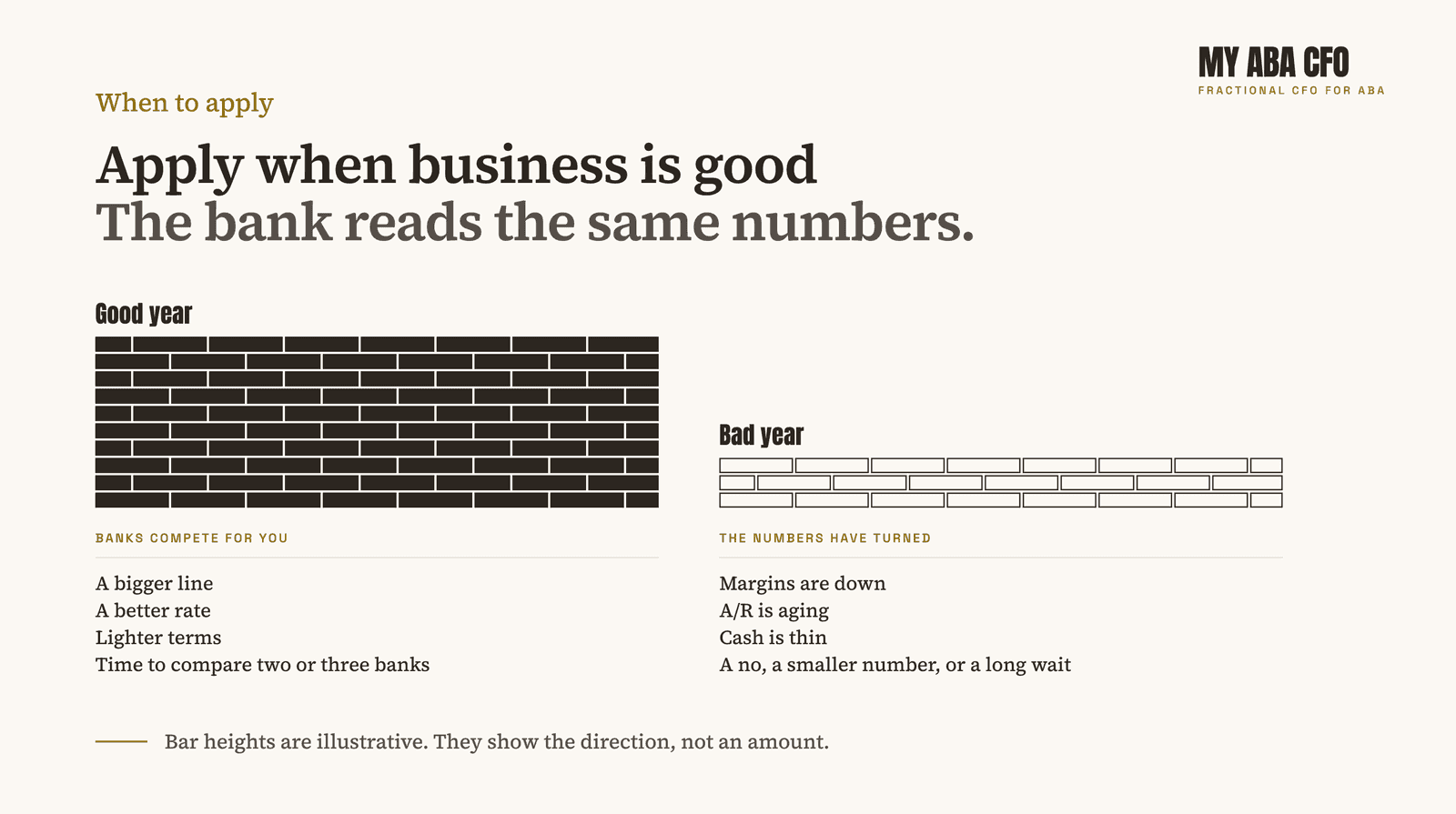
When business is good, you are the borrower banks compete for. You get a bigger line, a better rate, and lighter terms. You also have time to compare two or three banks instead of taking the first yes.
When business is bad, every number the bank looks at has already turned against you. Margins are down. A/R is aging. Cash is thin. The bank sees the same trouble you do. It says no, offers a smaller number, or takes so long that it does not matter.
Yes, a line you do not use has a cost. Often an annual fee, sometimes a small charge on the unused amount. On a line of a few hundred thousand dollars, that might run a few thousand dollars a year, depending on the bank. Compare that with one missed payroll.
Do this now: If the last twelve months were good, start the conversation with your bank this quarter. Not after the next surprise.
What a line is for, and what it is not
A line of credit covers timing. Payroll lands before a payer does. You hire RBTs for a new clinic and wait on credentialing. A payer changes its portal and sits on claims for a month. In each case the money is coming. You borrow, collect, and pay it back.
A line does not cover losses. If you are drawing on it because the business spends more than it earns, you do not have a timing problem. You have a margin problem with interest on top.
My test is simple. Before you draw, name the specific collections that will repay it and the date you expect them. If you cannot, stop and look at the business instead.
Do this now: Pair the line with a 13-week cash forecast, so you see the gap coming and draw on purpose.
Get the line before the bad week
If you are not sure how a bank would read your numbers today, find out while you still have options. Getting the financials bank-ready and sizing a line that fits is the kind of work I do with owners.
Thirty minutes on your business, your numbers and your next move. No pitch if it is not a fit.
Sources and further reading
Common questions
How does a line of credit for an ABA company work?
The usual structure is a revolving line tied to your receivables. The bank advances a percentage of what it calls eligible A/R. As a rough illustration, think 75% to 85% of receivables under 90 days old. Old A/R does not count.
How big a line of credit can an ABA company get?
It depends on your clean, current receivables. As a round example, a company billing $250,000 a month with $325,000 of A/R under 90 days could support a line of about $260,000 at an 80% advance rate. That is roughly one month of billings. These are round numbers, not a quote.
What does a bank ask for when an ABA company applies for a line of credit?
Expect two to three years of business financial statements and tax returns, recent year-to-date financials, an A/R aging report by payer, your payer mix, a list of existing debt, and a personal financial statement. A personal guarantee is usual. Some lenders treat Medicaid receivables more cautiously than commercial ones.
When should an ABA owner apply for a line of credit?
When things are going well. A bank lends on your last two or three years and your most recent quarter. In a good year you get a bigger line, a better rate and lighter terms. In a bad year the bank says no, offers a smaller number, or takes so long that it does not matter.
What should an ABA company use a line of credit for?
Timing, not losses. A line covers payroll that lands before a payer does, or a payer that sits on claims for a month, when the money is coming. If the business spends more than it earns, you have a margin problem with interest on top. Before you draw, name the collections that will repay it and the date you expect them.