Draft for MyABACFO.com · Nov 12, 2026
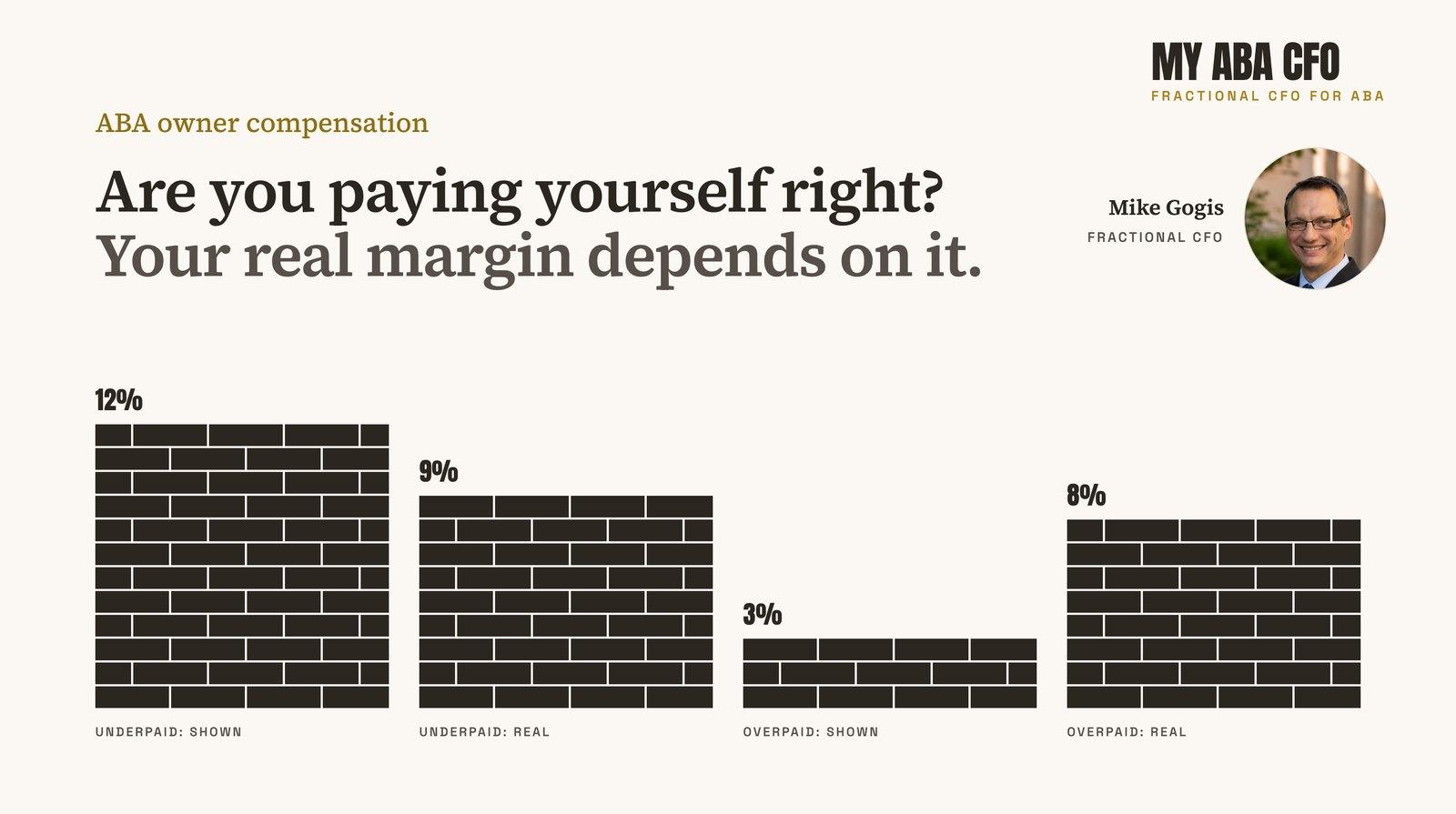
Most ABA owners can tell me their profit margin. Very few can tell me what it would be if they paid themselves what their job is actually worth.
Those are two different numbers. The second one is the real one.
Owner pay is the one line on your P&L that you set yourself. Set it too low and the company looks better than it is. Set it too high and it looks worse. Either way, every decision you make off that margin is built on a number you made up.
Salary and distributions are not the same money
Salary is what the company pays you for the work you do. CEO, clinical director, whatever seats you fill. It runs through payroll. It is an expense, and it lowers profit.
A distribution is what the company pays you for owning it. It comes out of profit after the fact. It never touches the P&L.
Both land in the same personal bank account, so most owners treat them as one thing. They are not. Salary is a cost of running the business. Distributions are the return on owning it. When the two blur, you cannot tell whether you own a good company or just have a job that sometimes pays well.
Do this first: Add up everything you took out last year and sort it into two piles. Payroll in one, everything else in the other.
Underpay yourself and the margin is inflated
This is the common one. It starts in the early years, when you skipped paychecks to make payroll. It sticks around in S corporations, where a low salary means less payroll tax.
Take a rough, illustrative company. $5 million in revenue. The P&L shows $600,000 in profit, a 12 percent margin. The owner works full time as CEO and clinical director, takes a $60,000 salary and pulls the rest as distributions.
Now ask what it would cost to hire someone to do that job. Call it $200,000. The number is rough, but it is not $60,000.
Put the real cost in and profit drops to $460,000. About 9 percent. Three points of that margin were never profit. They were you, working at a discount.
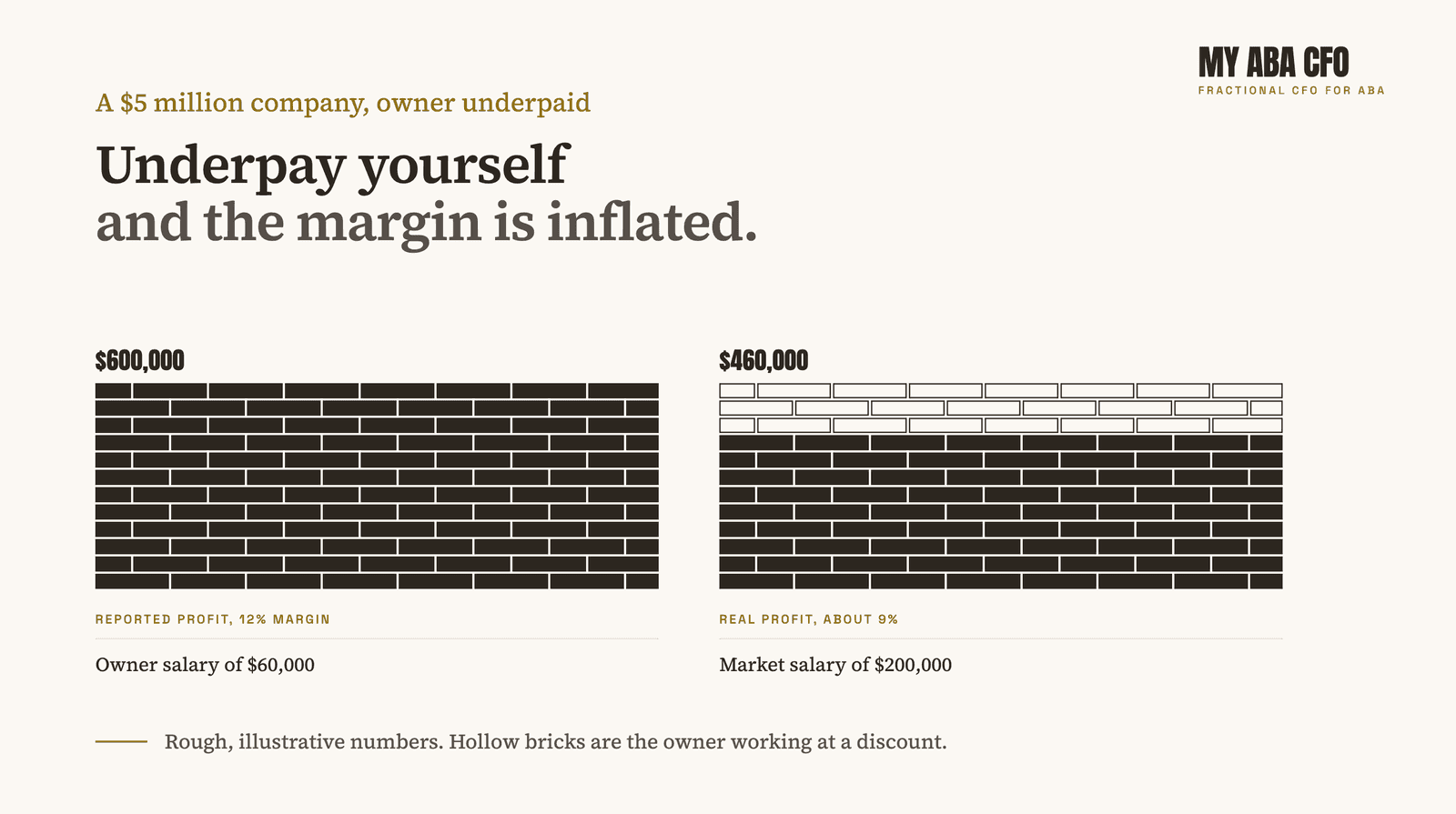
That matters because you are making decisions off the 12. Raises. A second clinic. A lease. And a buyer will do this math whether you do or not. They put a market salary in your seat, then price the company on what is left.
One more thing. The IRS expects S corporation owners who work in the business to take reasonable compensation. A very low salary next to large distributions is exactly what they look for.
Do this now: Write down what you would have to pay a stranger to do your job. All of it.
Overpay yourself and the margin is hidden
The opposite problem gets less attention. It does just as much damage.
Same $5 million company. This owner takes a $450,000 salary. The P&L shows $150,000 in profit. Three percent.
That owner thinks the company barely makes money. So they manage scared. They put off hiring the clinical director they need. They pass on the second location. A lender reading the same statements sees a thin business and prices the loan that way.
Swap in the $200,000 market salary and profit is $400,000. Eight percent. A different company, and that is before the vehicle, the phone plans and the family member on payroll.
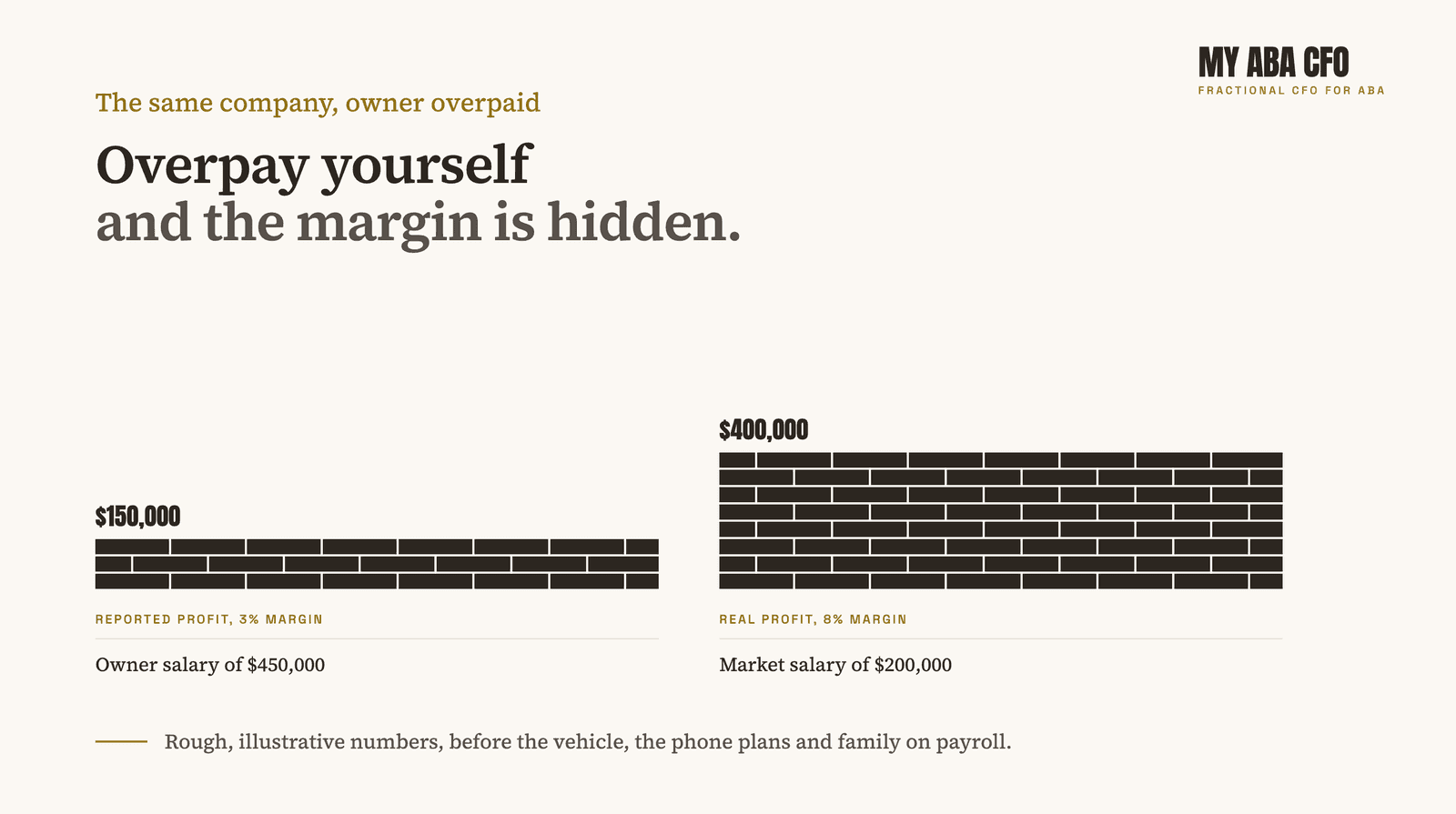
A buyer will give some of that back to you as an add-back. Only the part you can document, and only after an argument. Better to know the number yourself, years before anyone asks.
Do this now: List every personal or family cost the company pays. If it would vanish under a new owner, it is owner pay.
How to find the profit your company really makes
Three steps. None of them needs new software.
- Price your job. What would a non-owner cost to do everything you do? If you fill two seats, price both. A rough number beats no number.
- Restate your profit. Start with reported profit. Add back everything the company paid you through payroll and perks. Subtract the market number from step one. What is left is your real margin.
- Set your pay on purpose. Salary at or near market, on payroll, the same every period. Distributions on a schedule, quarterly works, after you have checked cash and set aside taxes. Not whenever the bank balance looks full.
Then look at both margins every month, the reported one and the real one. The gap between them is the part of your P&L that is about you, not the business.
A caution. The split between salary and distributions has tax consequences, and they depend on how your company is set up. Run any change past whoever prepares your return before you make it.
Build before you need it: One line on your monthly report that shows profit with a market-rate owner salary.
Not sure which side you are on?
Most owners I talk to are off in one direction or the other, and most have never seen the corrected number. It usually takes less than an hour to find.
Thirty minutes on your business, your numbers and your next move. No pitch if it is not a fit.
Sources and further reading
- S corporation compensation and medical insurance issues (Internal Revenue Service)
- Paying yourself (Internal Revenue Service)
Common questions
How should an ABA owner pay themselves?
Set your pay on purpose. Take a salary at or near market, on payroll, the same every period. Take distributions on a schedule, after you have checked cash and set aside taxes. The split has tax consequences, so run any change past whoever prepares your return first.
What is the difference between owner salary and distributions?
Salary is what the company pays you for the work you do. It runs through payroll, it is an expense, and it lowers profit. A distribution is what the company pays you for owning it. It comes out of profit after the fact and never touches the P&L.
How does ABA owner compensation change my profit margin?
Owner pay is the one line on your P&L that you set yourself. Set it too low and the company looks better than it is. Set it too high and it looks worse. In a rough example, a $5 million company showing a 12 percent margin drops to about 9 percent once a $200,000 market salary replaces a $60,000 one.
How do I find the real profit of my ABA company?
Three steps. Price your job at what a non-owner would cost to do everything you do. Start with reported profit, add back everything the company paid you through payroll and perks, then subtract that market number. What is left is your real margin.
Why does owner pay matter when selling an ABA company?
A buyer will do this math whether you do or not. They put a market salary in your seat, then price the company on what is left. If you overpay yourself, a buyer will give some of it back as an add-back, but only the part you can document, and only after an argument.